Orbexa Precision Bearings

Technical notes

The numbers behind the class names

Written by the people who run the machines and read the records. Six notes so far, each one turning on a standard or a figure that decides whether a lot passes.

Steel and balls · Cages · Thrust geometry · Mounting · Matched pairs · Thermal growth

The six notes

  • Polished steel balls of several diameters heaped on a pale ground, the three largest in front and reflecting the light source

    Note 01 · 2026-03-11 · 6 min

    Steel cleanliness is measured, steel grade is named

    A P4 marking fixes runout, not the steel. GCr15 (GB/T 18254, 100Cr6, AISI 52100) is more than 80% of bearing steel, and vacuum degassing is what takes out the inclusions that start fatigue. ISO 4967 measures what is left.
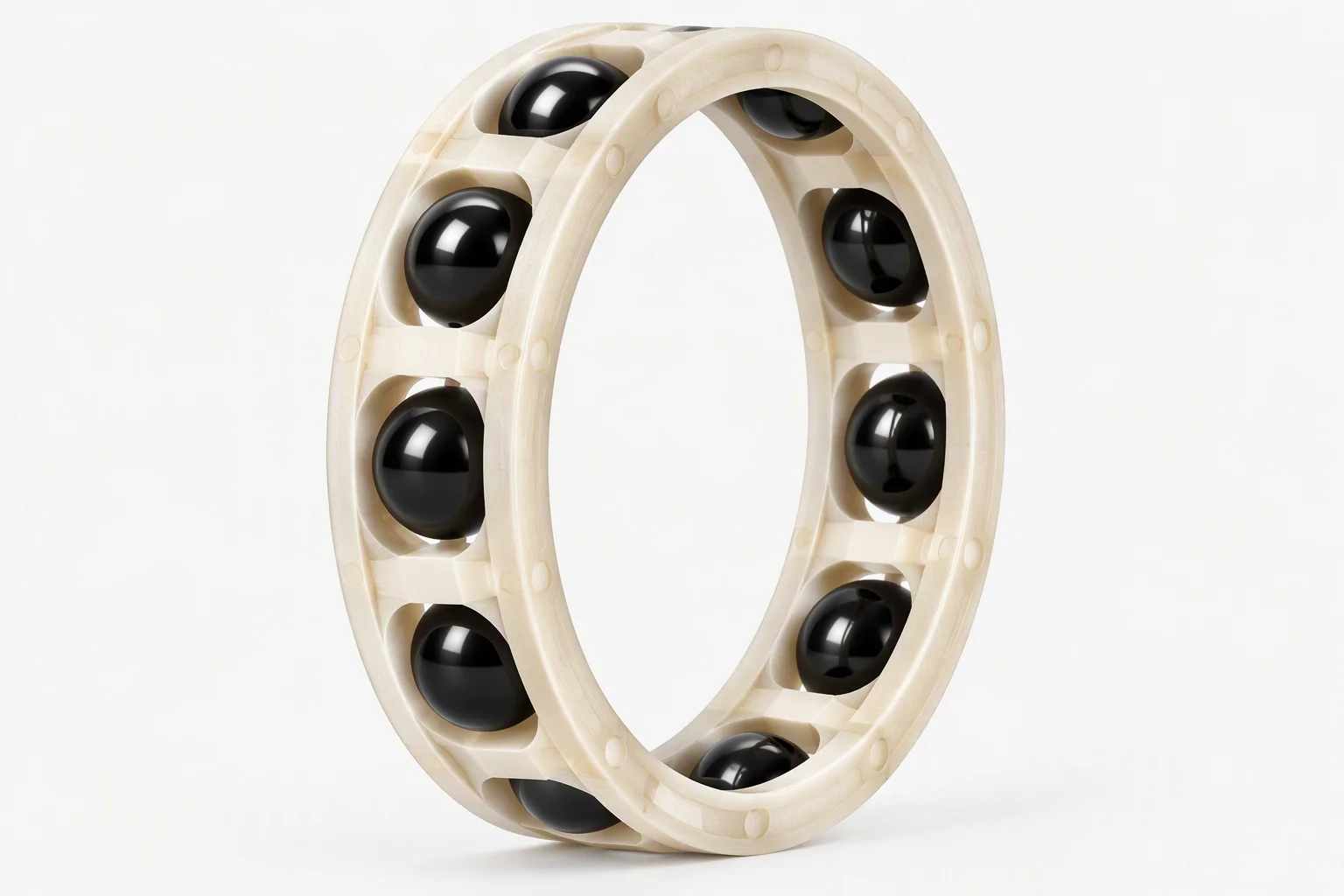
  • A cream-coloured machined cage ring holding a circle of polished black balls, photographed standing on edge

    Note 02 · 2026-04-08 · 5 min

    Brass, phenolic or PEEK: what the cage is chosen for

    Cage material follows speed and temperature, not load: brass (MR) as the general case, phenolic (T, T1) where the bore climbs, PEEK (TP, T6, T9) where the temperature does. The material set lives in the part number, not in a tolerance class.

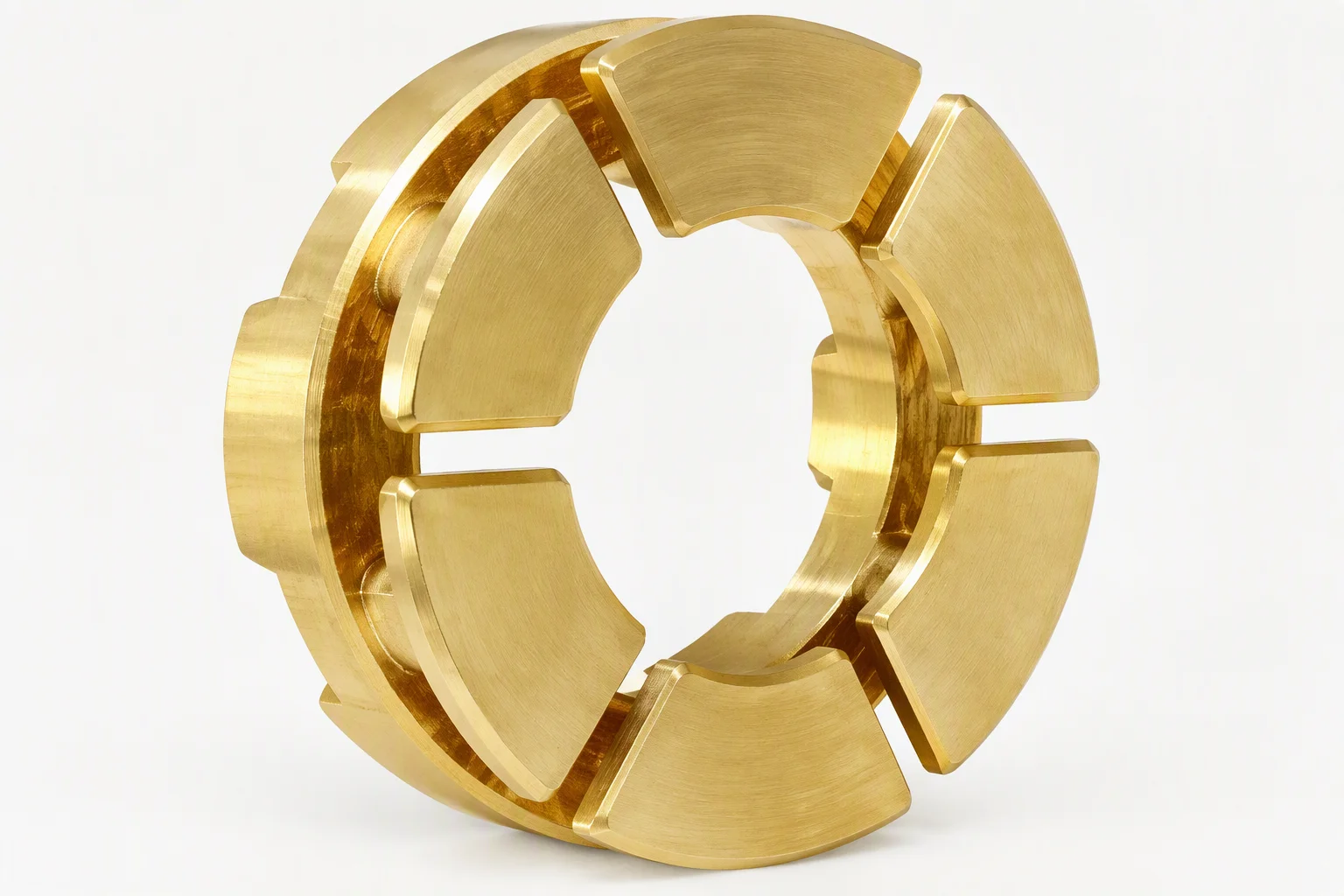
  • A brass thrust bearing pad set: sector-shaped pads with machined grooves arranged in a ring on a brushed gold ground

    Note 03 · 2026-05-20 · 7 min

    Thrust geometry: ISO 199 is not ISO 492

    Thrust bearings are covered by ISO 199; radial ones by ISO 492. A drawing that quotes the wrong standard is rejected on arrival. Geometry decides the rest: the pad count and the pad tilt set the oil wedge that carries the load.

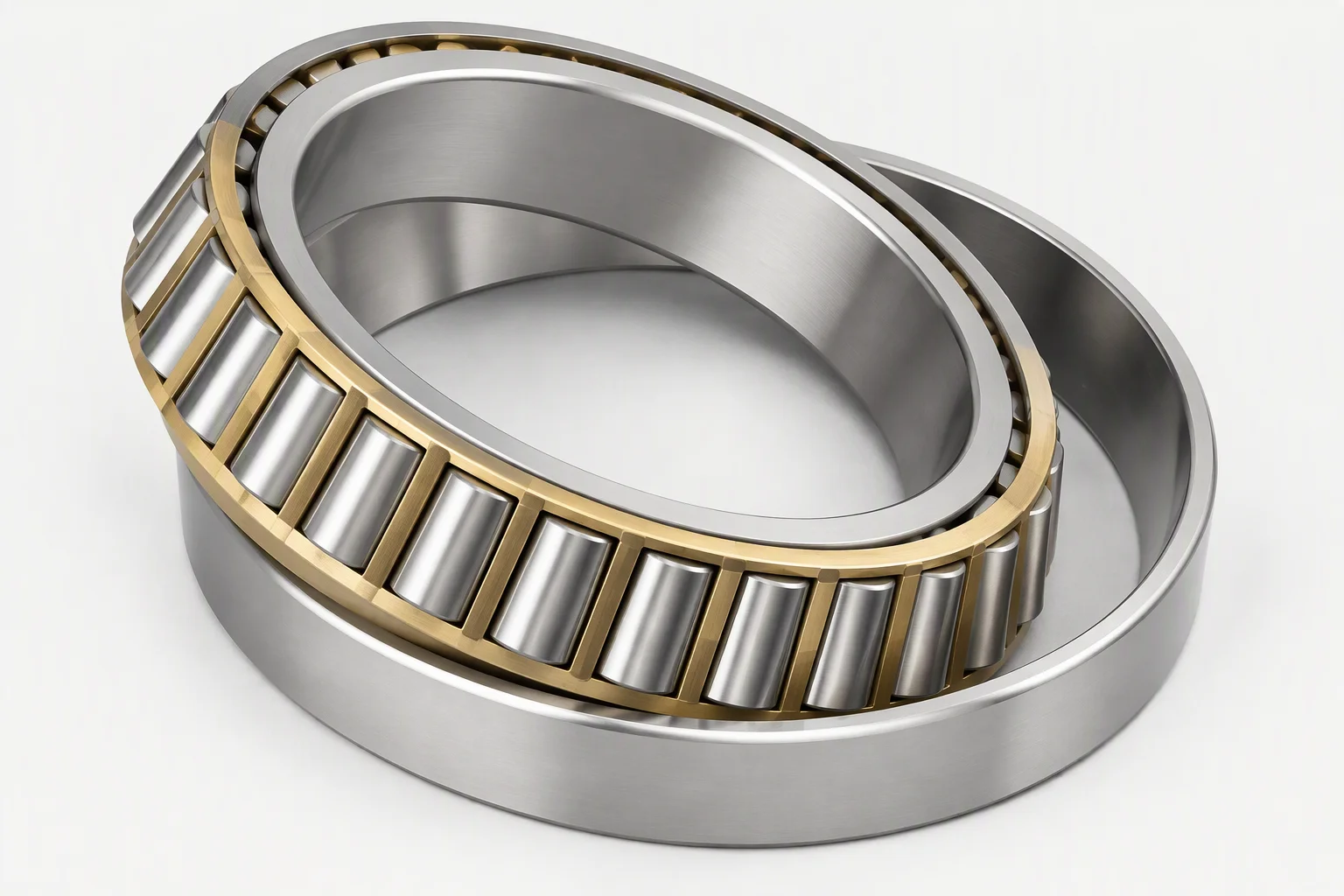
  • A cylindrical roller bearing with a brass cage, the rollers seated in the outer ring raceway

    Note 04 · 2026-06-17 · 6 min

    Fitting a roller set: the clearance code does the talking

    Clearance runs C2 < CN < C3 < C4 < C5 to ISO 5753-1:2009, and CN carries no suffix, so its absence from the part number is the code. Measured under a light load the reading inflates by 4–6 µm at 18–50 mm bore.

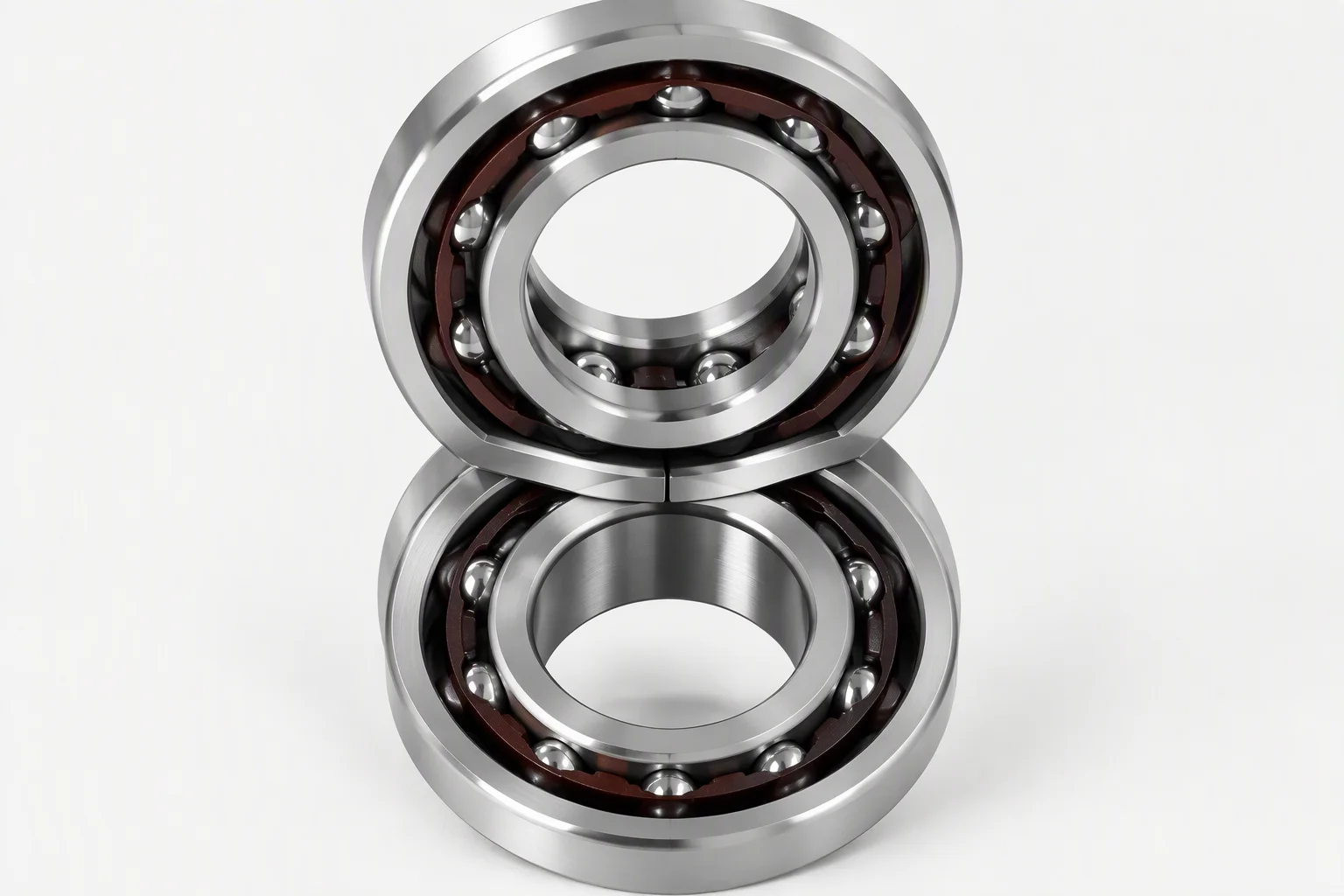
  • Two angular contact ball bearings stacked one above the other, each with a dark phenolic cage and a ring of steel balls

    Note 05 · 2026-07-15 · 8 min

    Matched pairs: preload is a speed decision

    Preload comes in four standard steps (GL, GN, GM, GH) on top of any contact angle from 15° to 40°. The optimum moves with speed, so a pair is set cold and the running clearance is what the heat does to it.

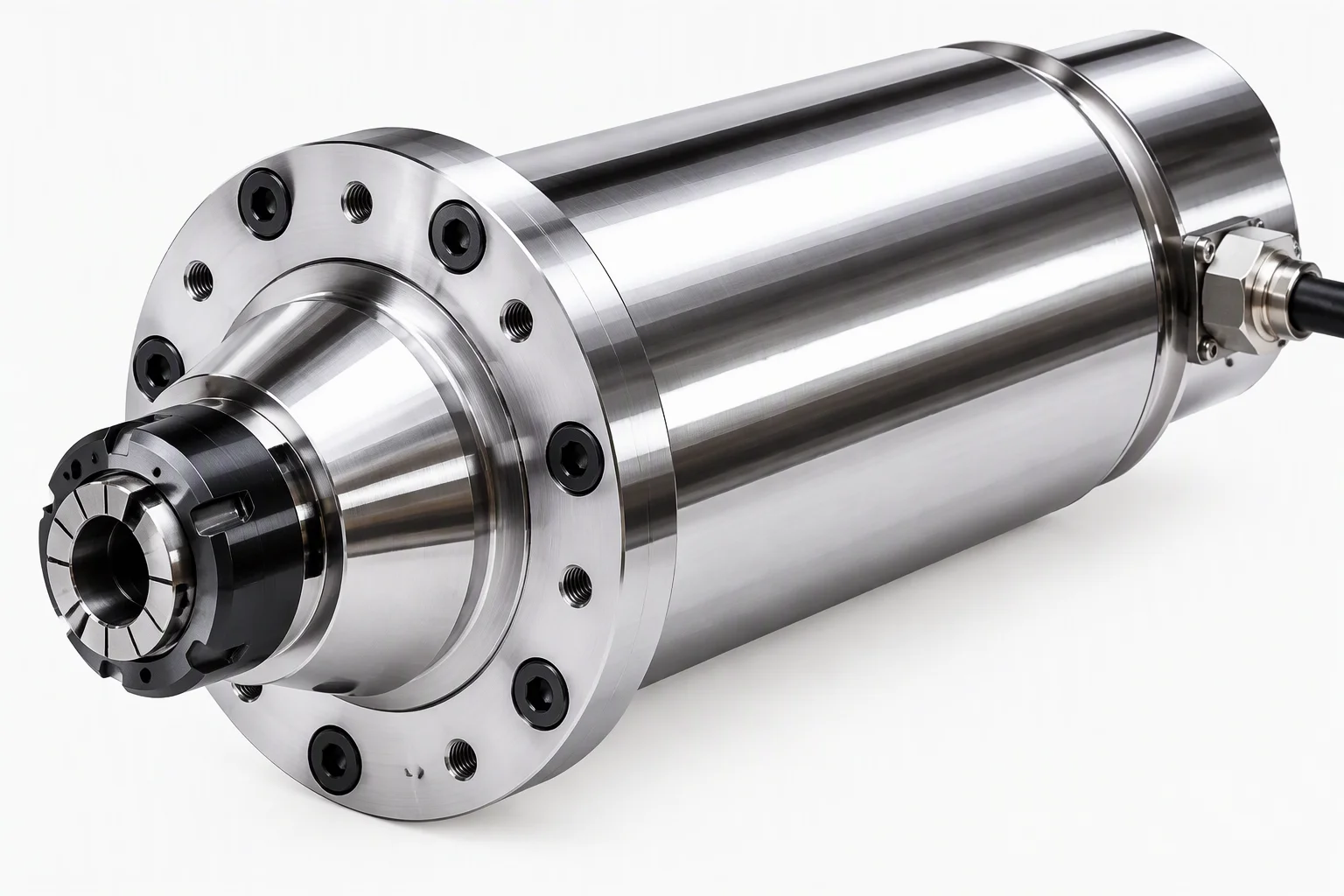
  • A motorised spindle unit: a polished cylindrical body with a flanged mounting face, a collet chuck at the front and a cable gland at the rear

    Note 06 · 2026-08-19 · 7 min

    Thermal growth: where 0.5 to 6 hours goes

    A spindle can take 0.5 to 6 hours to stabilise, and the deformation keeps moving after that. Inner-ring growth and centrifugal force eat internal clearance at speed, which is why a P2 spindle bearing gets a temperature-rise target below 50 °C.

A macro view of a bearing ring on a dark ground: concentric machined faces and a raceway catching a raking light, the left of the frame left in shadow

Request

Ask for the record behind any of these notes

A written answer within two working days, quoting the runout figure actually measured for that lot.

Email it instead

Every figure quoted in these notes came off a lot we measured. If the form cannot send, write to sales@orbexa.com.